Weekly Reflection Blog Post #5- Feb. 13th
This week, I had the opportunity to attend one of the third online pro-d sessions, “I Am Because We Are: Grade 6-9 Black Canadian Learning Resource.” This educational resource is fantastic. It is based on principles from South African “Ubuntu”, which talks about how people are who they are because of who everyone else around them is. People shape people and humanity needs to be shown to all. It stresses how learning is relational because it is full of respectful and mutual relationships. Humanity has to be connected in order to build community, care for others and in turn, make educational spaces flourish.
The resource explores some of the experiences of Black Canadians in history and today. These stories often go untold in education and are designated to a specific time only, via Black History Month. It discusses things such as key terms, definitions, questions, historical facts, language words, and resilience stories. One such story is Chloe Cooley’s from the 1700s where she helped get the ball rolling for the abolishment of slavery in Canada by forcing her voice to be heard and refusing to comply. https://www.youtube.com/watch?v=cLPMlNSQjOg. Many real stories like this are told. More contemporary ones are also highlighted such as South African apartheid and the struggle for rights outside Canada. It is also important to talk about Black excellence and the many proud aspects of different Black cultures and identities; things that are not directly related to struggle, as highlighted with the section on braids and cornrows, athletes, scholars, etc. I am extra attentive to this resource due to my subject area in social studies. There are so many amazing and often forgotten opportunities to highlight Black voices in history. Canada has been shaped by Black individuals and groups for a very long time and they have brought in a large part of the multicultural aspect that makes the country’s identity. This resource helps show how many resources and topics there are that anyone can celebrate and draw from.
Although this is a great resource and shows so many good things, I want to reflect on potential downsides. I don’t think these are direct downsides of the resource because it is a mainly positive space, but just some things to keep in mind when trying to translate these ideas into teaching. We must be aware of lived experiences and the sensitivities that come with that. Not everyone is willing to share their lives all the time or even ever so we can’t pry. We also have to be aware of historical facts and always make sure claims are what they say they are in order to not make up voices or skew stories. Lastly, over-generalization is a big point here. Because we are talking about “Black” experiences, we have to remember that this blankets over millions of lives, across centuries, and across dozens of nations and identities. We just have to be conscious of our use of language and statements.
Overall, I also believe the resource can be expanded so much upon. The sections felt fairly brief and I think there is room for many more stories, especially those of everyday community members who would not get their stories told otherwise. The information can be expanded to many other countries, ethnic groups and dialects to get a wider range of experiences. These are things that teachers and students can be aware of when exploring this site. I would see myself using this resource in my future classrooms.
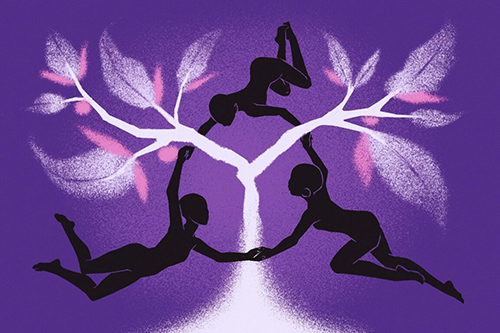
Coexistence Image Via: https://mytrainingbc.ca/focuseded-iabwa/content/1/s1-001.html